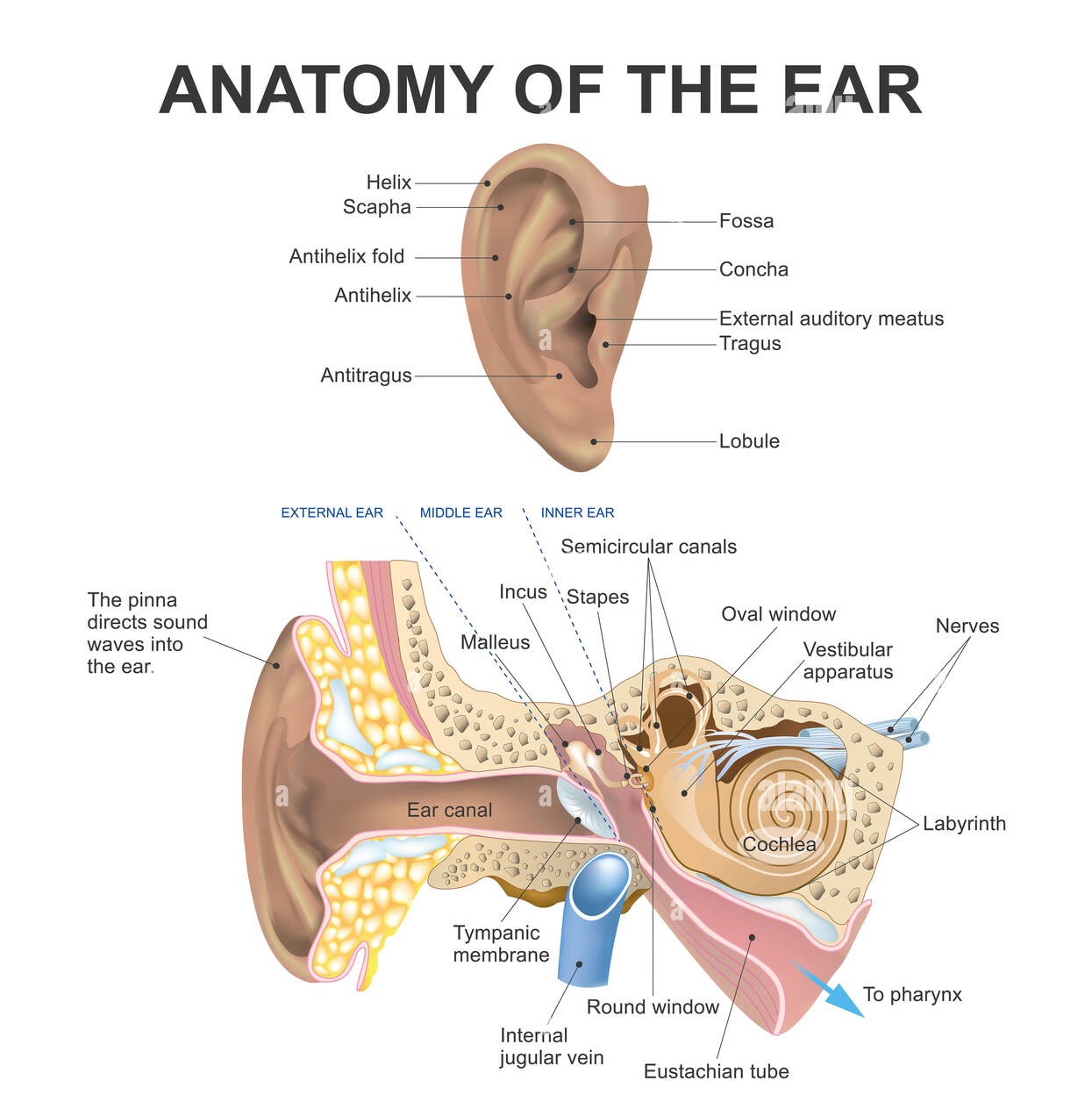
The decibel (dB) scale for human hearing:
The Minimum: 0 dB
The “absolute threshold of hearing” for a young, healthy adult is 0 dB.
It’s a common misconception that 0 dB means “no sound.” In reality, decibels are a logarithmic scale used for comparison. 0 dB is simply the quietest sound a human ear can detect (like a mosquito flying 10 feet away in a perfectly silent room).
- Fun Fact: Some people with exceptional hearing can actually hear into the negatives (e.g., -5 dB).
- The Physical Limit: If our ears were any more sensitive, we would constantly hear the sound of air molecules bumping into our eardrums!
The Maximum: 120 dB to 140 dB
There isn’t a “limit” to what you can hear, but there is a limit to what you can hear safely.
- 120 dB (The Threshold of Discomfort): This is where sound starts to feel physically uncomfortable. Think of a loud rock concert or a chainsaw.
- 130 dB (The Threshold of Pain): At this level, your ears will likely hurt. Physical damage can happen almost instantly.
- 140 dB+ (Immediate Trauma): Sounds like a jet engine taking off or a gunshot at close range. This can cause immediate, permanent hearing loss or a ruptured eardrum.
Why the “Safe” Max is Lower Than You Think
While we can hear up to 140 dB, the “maximum” for daily life is much lower. Health organizations generally agree that:
- 85 dB is the safety limit for long-term exposure (about 8 hours).
- For every 3 dB increase above that, the safe listening time is cut in half.
| Sound Level | Common Example | Safe Exposure Time |
| 30 dB | Whisper | Unlimited |
| 60 dB | Normal Conversation | Unlimited |
| 90 dB | Hair Dryer / Lawnmower | ~2 Hours |
| 110 dB | Shouting in Ear / Nightclub | ~2 Minutes |
| 140 dB | Firecracker | Instant Damage |
Leave a Reply