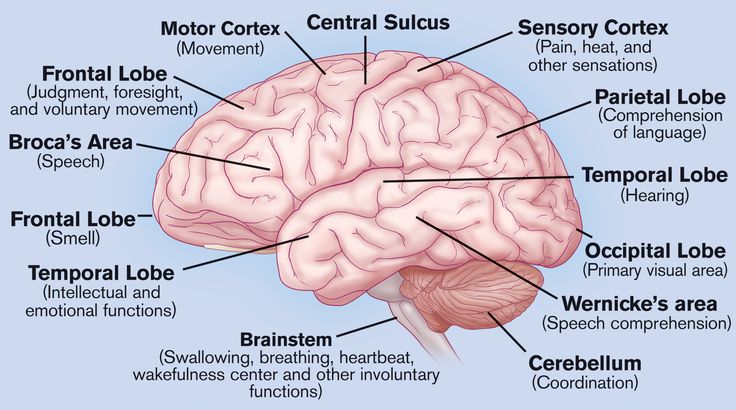
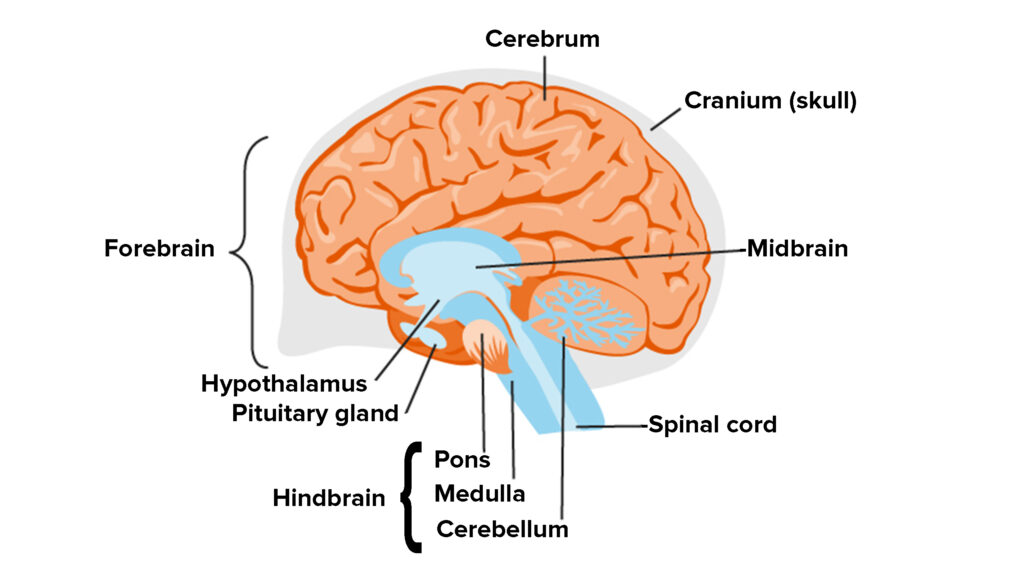
The human brain is a complex organ, and it’s typically divided into several major parts, each with specific functions:
1. Cerebrum (Largest part of the brain)
- Function: It controls higher functions like reasoning, memory, emotion, voluntary muscle movements, and interpretation of sensory information.
- Divisions:
- Frontal Lobe: Responsible for decision-making, problem-solving, and controlling voluntary movements.
- Parietal Lobe: Processes sensory information, like touch, temperature, and pain.
- Temporal Lobe: Involved in auditory processing, memory, and speech.
- Occipital Lobe: Primarily responsible for visual processing.
2. Cerebellum
- Function: Coordinates voluntary movements, balance, and motor control. It helps in fine-tuning movements like walking and writing.
3. Brainstem
- Function: Controls essential life functions such as heart rate, breathing, and blood pressure.
- Divisions:
- Midbrain: Involved in visual and auditory processing and movement.
- Pons: Relays signals between different parts of the brain and regulates sleep and breathing.
- Medulla Oblongata: Controls involuntary functions such as heart rate, digestion, and respiration.
4. Diencephalon
- Thalamus: Relays sensory and motor signals to the cerebral cortex.
- Hypothalamus: Regulates basic body functions such as temperature, hunger, and thirst, and controls the endocrine system via the pituitary gland.
5. Limbic System
- Function: Plays a crucial role in emotions, memory, and behavior.
- Structures:
- Amygdala: Involved in emotional responses, especially fear and pleasure.
- Hippocampus: Essential for the formation of new memories.
Each part of the brain works in concert to allow us to think, feel, move, and interact with the world around us.
Leave a Reply